Choosing an electronic board assembly partner in 2026 means looking beyond a polished website or a low quote. The right manufacturer must turn design files into reliable boards, manage component sourcing, and catch defects before products leave the factory. A misplaced component or a weak solder joint can become an expensive field failure. Details matter.
Demand is shifting, too. The Semiconductor Industry Association, citing the World Semiconductor Trade Statistics forecast, reported that global semiconductor sales were expected to reach $627.8 billion in 2024 and $697.2 billion in 2025. Those figures do not measure board assembly directly. They do, however, show the scale and momentum of the broader electronics supply chain that assembly firms serve. Supply availability, production capacity, and traceability deserve close attention.
This guide compares ten manufacturers using practical considerations: assembly capabilities, quality systems, prototyping support, production scale, and communication. A company suited to a short-run industrial sensor may not fit a high-volume consumer device. Ask how it handles component substitutions, inspection records, and changes between prototype and production. Then verify the answers against your own requirements. No ranking can replace that work; even a strong supplier may be the wrong fit.
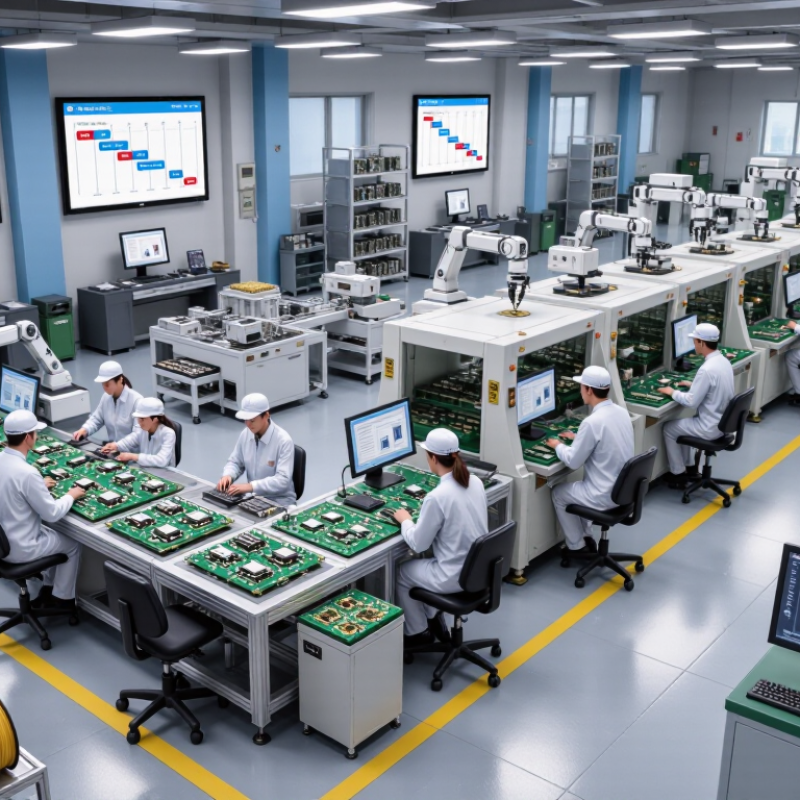
Electronic board assembly turns a bare circuit board into a working electronic unit. The scope can include component sourcing, soldering, inspection, testing, and sometimes enclosure integration. The process begins with a design review and a bill of materials check. Technicians then place components using surface-mount or through-hole methods. Reflow ovens melt solder paste in controlled temperature zones; wave soldering can join suitable through-hole parts.
Small details matter. A misplaced resistor or weak joint may cause intermittent faults that appear only after vibration or heat.
Assembly providers support product teams that lack production equipment or need flexible capacity. Their role extends beyond placing parts on boards. They may assess manufacturability, track materials, document test results, and identify recurring defects. Inspection can combine automated optical checks with electrical tests, though neither catches every failure. A passed test is useful, but it does not prove perfect reliability. That assumption deserves reconsideration, especially for products exposed to temperature changes.
Tips: Share current drawings, approved component substitutes, and expected production volumes when requesting a quote. Ask how defects are recorded and test coverage is defined. Keep a sample board from each build for comparison. The right assembly partner depends on board complexity, traceability needs, schedule, and required engineering support.
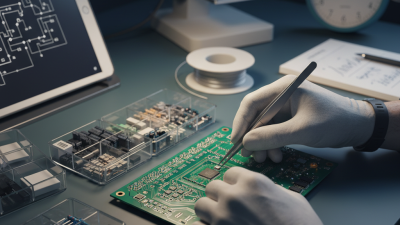
In 2026, evaluate electronic board assembly manufacturers by the controls behind their claims, not by equipment lists alone. A capable partner should explain how it manages component verification, solder-paste printing, placement accuracy, and reflow profiles. Ask for proof. Request sample inspection records, process capability data, and clear traceability from incoming components to finished boards. For dense designs, check whether inspection methods include automated optical inspection and suitable X-ray coverage.
Assess how the manufacturer handles engineering changes, prototype builds, and production ramp-ups. Ask how quickly it flags a footprint conflict or a component shortage, and who approves process adjustments. A low defect rate is useful, but only when the calculation, sample period, and failure categories are clear. Averages can hide trouble. Review corrective-action examples to see whether reported issues led to verified process changes, rather than just a revised checklist.
Confirm that stated capacity matches the board size, layer count, and monthly volume you actually need. Discuss material sourcing, lot separation, test coverage, and delivery performance using specific scenarios. If possible, inspect the production floor or request a live process review. No score is perfect. A polished audit can still miss weak communication during a rushed build, so assess how questions are answered before placing a larger order.
Suggested evaluation weights for comparing manufacturers: quality systems and compliance (25%), engineering capability (20%), process control and traceability (18%), supply-chain resilience (15%), delivery performance (12%), and cost transparency (10%). These are framework weights, not results from a manufacturer survey.
The ten profiles below compare capability-led manufacturer types, not named-company endorsements. Profile one suits high-volume consumer boards, with automated surface-mount lines and fast changeovers. Profile two handles industrial products that need varied builds and controlled revisions. Profile three emphasizes automotive traceability, recording material lots and inspection results. Profile four supports medical-device assemblies with documented processes and careful change control. Profile five specializes in radio-frequency boards, where small layout or soldering variations can affect performance.
Demand is shifting: the World Semiconductor Trade Statistics November 2024 forecast projected global semiconductor sales of $627.4 billion in 2024, up 19% year over year. That growth raises pressure on assembly capacity, but it does not prove every supplier is qualified. Profile six builds rigid-flex assemblies for compact equipment. Profile seven offers turnkey sourcing alongside board assembly. Profile eight focuses on prototypes and new-product introduction, where clear feedback matters. Profile nine assembles power boards with heavy copper and thermal checks. Profile ten coordinates production across multiple sites to reduce supply disruption. Buyers should verify process controls, inspection records, and demonstrated experience against the product’s actual needs. Ask for evidence, not promises. Standards-based checks help, though a polished audit file cannot replace consistent production-floor results.
Anonymous, capability-based profiles for comparing common electronic board assembly service models. These are not verified company rankings or company-specific claims; available processes, certifications, and capacity vary by facility and should be confirmed directly.
| Profile | Primary Strength | Typical Assembly Capabilities | Quality & Compliance Considerations | Best-Fit Projects |
|---|---|---|---|---|
| Profile 01 High-Volume SMT |
Repeatable production of established, higher-volume board designs. | Surface-mount assembly, automated optical inspection, solder-paste inspection, and in-circuit testing where the test strategy supports it. | Confirm process controls, traceability, inspection coverage, and acceptance criteria against the product specification and applicable IPC-A-610 class. | Consumer, networking, and industrial products with stable designs and predictable demand. |
| Profile 02 Prototype & NPI |
Fast engineering feedback during prototype builds and new product introduction. | Low-volume SMT and through-hole assembly, engineering change coordination, first-article inspection, and build documentation. | Confirm revision control, component substitution approval, and documented nonconformance handling before production release. | Prototype runs, design validation, pilot builds, and early-stage products. |
| Profile 03 High-Mix, Low-Volume |
Flexible scheduling for varied products and changing build quantities. | Mixed-technology assembly, multiple product changeovers, configurable inspection, and batch-level production records. | Review lot segregation, component identification, work-instruction control, and traceability requirements for each program. | Industrial controls, instrumentation, and products with many variants or intermittent demand. |
| Profile 04 Fine-Pitch & HDI Assembly |
Assembly of densely routed boards and packages with fine-pitch connections. | Fine-pitch SMT placement and reflow processes; support for BGA and other area-array packages depends on equipment and inspection methods. | Ask how hidden solder joints are inspected, including whether X-ray inspection is available and appropriate for the design. | Compact communications, computing, and embedded electronics requiring high component density. |
| Profile 05 Mixed SMT & Through-Hole |
Boards combining surface-mount components with leaded or mechanically robust parts. | SMT placement, wave or selective soldering where suitable, hand assembly for approved operations, and post-assembly inspection. | Confirm solder-joint acceptance criteria, process qualification, and handling controls for components sensitive to heat or moisture. | Power supplies, industrial equipment, and control boards with connectors or larger through-hole components. |
| Profile 06 Automotive-Oriented |
Production processes designed to address automotive quality and traceability expectations. | Electronic assembly with program-specific process controls, product identification, inspection, and test planning. | Confirm site-specific IATF 16949 certification status where required; certification and customer-specific requirements must be verified for the relevant facility and scope. | Automotive electronics programs whose customers require formal quality-system and traceability controls. |
| Profile 07 Medical-Device Oriented |
Manufacturing support for electronic assemblies used in regulated medical-device programs. | Controlled assembly processes, documented inspection, configuration control, and production records defined for the customer program. | Verify applicable ISO 13485 certification scope and the customer’s regulatory, validation, and record-retention requirements. | Medical instruments and monitoring equipment where supplier controls are part of the device quality system. |
| Profile 08 Rugged & Reliability-Focused |
Assembly planning for products exposed to demanding operating environments. | SMT and through-hole assembly, protective coating or encapsulation when specified, and functional testing based on product requirements. | Confirm coating coverage, cleanliness criteria, environmental test responsibilities, and workmanship acceptance requirements. | Energy, transportation, outdoor communications, and industrial products subject to vibration, moisture, or temperature variation. |
| Profile 09 Box-Build & System Integration |
Combining assembled boards with wiring, enclosures, and other system components. | PCB assembly plus cable or harness integration, mechanical assembly, labeling, and final functional testing when included in the agreed scope. | Define responsibility for supplied parts, configuration records, end-of-line tests, and final product acceptance. | Equipment makers seeking a single supplier for board assembly and selected downstream integration work. |
| Profile 10 Supply-Chain & Lifecycle Support |
Coordinating component sourcing and production continuity over a product’s lifecycle. | Procurement support, incoming component checks, approved-substitute workflows, assembly, and lifecycle or obsolescence communication. | Confirm authorized sourcing practices, counterfeit-risk controls, lot traceability, and written approval procedures for substitutions. | Long-life industrial, infrastructure, and embedded products with ongoing component availability needs. |
Choosing among the ten best electronic board assembly manufacturers in 2026 means comparing services, certifications, and production capabilities—not just quoted prices. Some providers handle component sourcing, board fabrication, surface-mount assembly, and final testing under one roof. Others specialize in assembly and expect customers to supply ready-to-build boards. That difference can affect schedules and who resolves sourcing problems. Ask for a clear breakdown.
Certifications offer useful evidence, but they do not guarantee consistent results on every order. Check whether a manufacturer’s quality system fits your industry and product risks. ISO 9001 may indicate documented quality processes, while automotive programs can require more specific controls. Ask how inspection records, component traceability, and corrective actions are handled. Details matter. A certificate alone is not enough.
Production capacity should match your actual demand, from a handful of prototypes to recurring high-volume builds. Ask about minimum order quantities, line changeover times, automated optical inspection, and X-ray inspection for hidden solder joints. Request sample reports or a walkthrough of the process. A polished capability sheet can still leave gaps; I would verify lead times and escalation contacts before committing. Sometimes the best fit is not the largest factory, but the one that communicates clearly when a build goes off plan.
Choosing among the 10 best electronic board assembly manufacturers in 2026 starts with the board, not the ranking. A compact sensor board with fine-pitch parts needs different process controls than a rugged controller built in small batches. Share the bill of materials, board files, expected volume, and operating conditions before requesting a quote. Ask how the manufacturer handles component sourcing, solder-paste inspection, and first-article approval. Specific answers matter. A vague promise of “high quality” does not explain how defects are found or documented.
Match the factory’s capabilities to the risks in your design. For dense layouts, ask about design-for-manufacturing feedback and inspection methods for hidden solder joints. For products exposed to vibration or heat, discuss materials, thermal management, and suitable testing. Request sample inspection records and clarify how revisions, substitutions, and production delays are communicated. Check the proposed lead time against actual component availability, not just assembly capacity. Small details matter. It is easy to overvalue a polished quotation and overlook a slow engineering response. That judgment deserves a second look. Compare total project fit, including test coverage, traceability, communication, and room for a pilot run, before committing.