Top Tips for Designing PCB Effectively for Global Buyers
In an era where electronics drive innovation, the ability to design PCB effectively is crucial for success. The global PCB market is projected to reach $83.9 billion by 2027, growing at a CAGR of 4.7%. This growth is fueled by increasing demand for consumer electronics, automotive applications, and IoT devices. However, many designers struggle with balancing complexity and manufacturability when they design PCB.
Quality PCB design directly impacts product reliability and longevity. According to industry studies, nearly 25% of PCBs suffer from design flaws leading to performance issues. These numbers highlight the need for meticulous attention to detail and a deep understanding of materials, fabrication processes, and testing protocols. Designers must also consider regional specificities, such as compliance with local standards, which can complicate the design process.
Moreover, evolving technologies, like flexible PCBs and high-frequency applications, require designers to adapt quickly. Continuous learning is essential. Reflecting on past design challenges can provide valuable insights. Acknowledging these issues fosters a culture of improvement. Ultimately, designing PCBs is not merely a technical task; it is an art that demands precision, expertise, and foresight.

Essential Principles of PCB Design for Global Markets
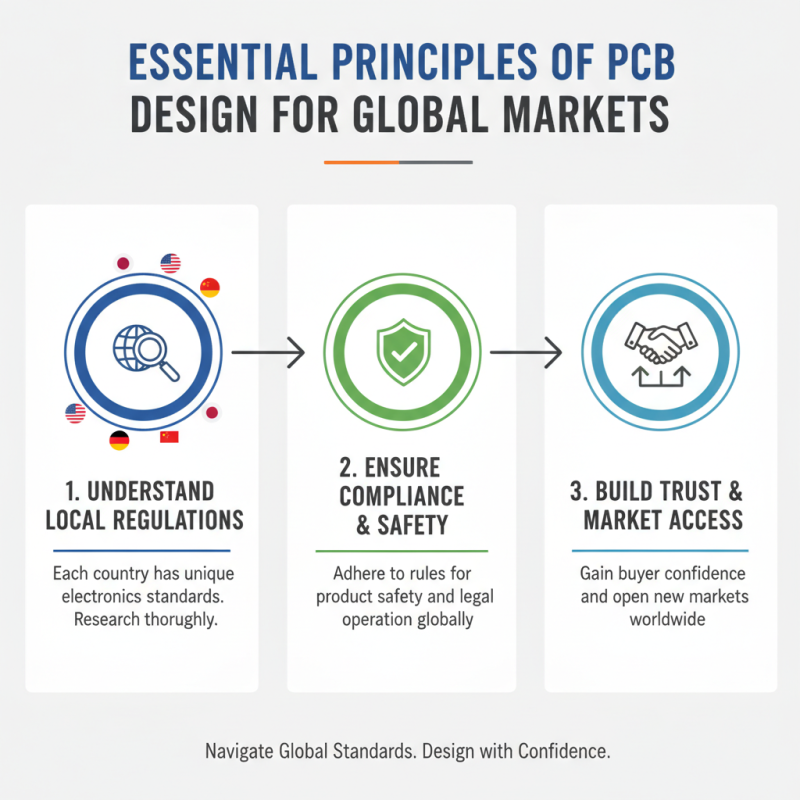
Designing PCBs for global markets requires attention to several key principles. First, understand the local regulations. Each country has its own standards for electronics. Before beginning a project, research these rules thoroughly to avoid issues later. Compliance not only ensures safety but also builds trust with buyers.
Next, adaptability is crucial. Consider the variations in market needs. Different regions may have unique requirements for size, function, or environmental conditions. Your design should be flexible enough to accommodate these differences. For instance, a PCB for a humid climate might need extra coating for protection.
Also, involve diverse teams in the design process. Collaboration with individuals from various backgrounds can lead to innovative solutions. However, team dynamics can be challenging. Miscommunication can occur, leading to design flaws. Regular check-ins and feedback loops can help mitigate these risks. The goal is to learn and improve continually. Embrace the process of iteration, and be open to adjustments based on feedback.
Understanding International Standards and Compliance in PCB Manufacturing
When designing PCBs for global buyers, compliance with international standards is essential. Each region has specific regulations that govern PCB manufacturing. These standards ensure safety, reliability, and compatibility. Understanding these requirements can be challenging. However, a lack of knowledge can lead to costly mistakes and product recalls.
One critical aspect is insulation resistance. Many countries demand high insulation resistance levels for safety and performance. Regular testing during the manufacturing process can help meet these standards. Additionally, material selection is crucial. Not all materials are compliant with regulations in various regions. Choosing the right substrates and finishes can simplify the compliance process.
Documentation is another area often overlooked. Proper documentation ensures traceability and helps with audits. Maintaining records of compliance tests and certifications fosters trust. It can also speed up the approval process. Failure to document processes can result in delays. Reflecting on these issues can lead to better practices in the long run. Each step in the design and manufacturing phases impacts your ability to meet international standards.
Incorporating User Feedback for Global PCB Design Enhancements
User feedback is vital for enhancing PCB designs. Listening to users helps identify pain points in existing products. For instance, engineers can gather insights through surveys or interviews. This method often reveals usability issues that may not be apparent during the design phase.
Engaging with users fosters collaboration. Invite feedback early in the design process to create an iterative loop. This allows for adjustments based on real-world experiences. Focusing on how users interact with the PCB can lead to meaningful improvements. However, not all feedback is practical. Some suggestions may conflict with technical constraints or budget limitations.
Evaluating user input critically is key. Prioritize feedback that aligns with design goals and market needs. A balance between user wishes and feasible solutions is essential. Updates based on thoughtful assessment help create better, user-centered products. This approach not only enhances functionality but also builds trust with global buyers.
Global PCB Design User Feedback Analysis
Choosing the Right Materials and Components for Global PCB Success
Choosing the right materials and components is crucial for global PCB success. Recent studies indicate that material selection can impact performance and lifecycle significantly. For example, FR-4 remains a popular choice due to its balance of cost and performance. However, emerging materials like polyimide offer superior thermal stability, essential for high-temperature applications.
When selecting components, buyers must consider reliability. A report from IPC shows that defective components lead to costly recalls, averaging $1.61 million per incident. Even minor flaws can lead to significant failures. It's vital to evaluate suppliers based on their track record and quality certifications.
Furthermore, ignoring environmental factors can be detrimental. Eco-friendly materials are increasingly favored, as companies aim for sustainability. In fact, 70% of global buyers now prefer PCBs designed with recyclable components. This shift reflects a market responding to consumer demand for greener electronics. Failure to adapt may leave companies behind in a competitive landscape.
Top Tips for Designing PCB Effectively for Global Buyers - Choosing the Right Materials and Components for Global PCB Success
| Dimension |
Description |
Importance |
Considerations |
| Material Selection |
Choosing the right materials such as FR-4, Rogers, or aluminum based on application. |
Critical for performance, reliability, and cost-effectiveness. |
Understand thermal requirements, electrical properties, and mechanical stresses. |
| Component Sourcing |
Identifying reliable suppliers for high-quality components. |
Ensures product longevity and performance consistency. |
Consider lead times, cost, and availability in the global market. |
| Design for Manufacturability (DFM) |
Creating designs that are easy and cost-effective to manufacture. |
Reduces production errors and minimizes costs. |
Take into account the fabrication and assembly processes during design. |
| Testing and Validation |
Conducting thorough tests to ensure compliance with regulations. |
Essential for market acceptance and safety standards. |
Include environmental testing and reliability assessments. |
| Cost Management |
Balancing quality and cost to meet budget constraints. |
Affects overall profitability and pricing strategy. |
Evaluate trade-offs between different materials and processes. |
Effective Communication Strategies with International PCB Suppliers
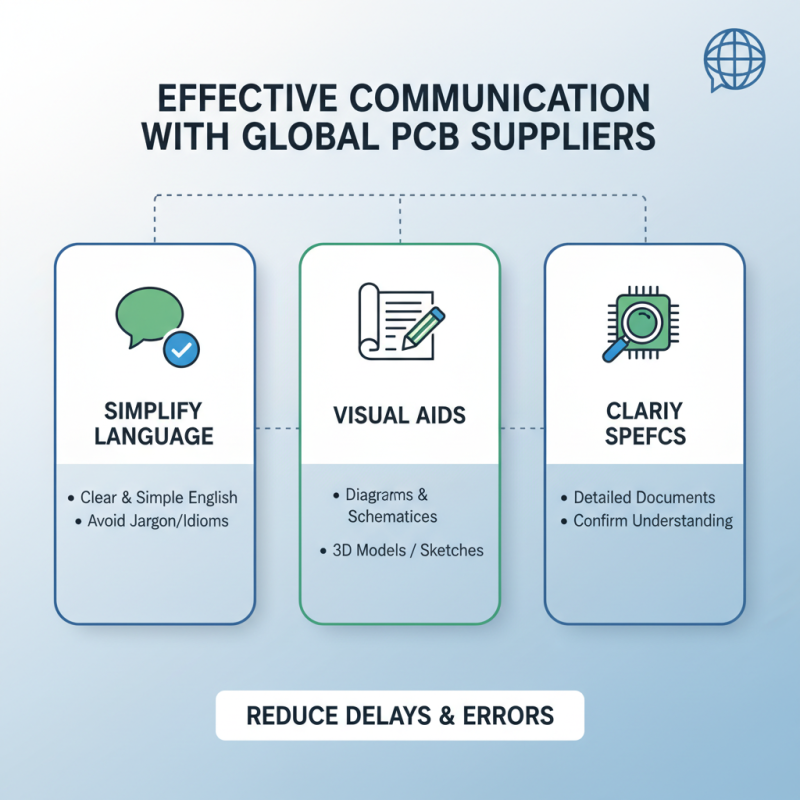
Effective communication is crucial when collaborating with international PCB suppliers. Language barriers can lead to misunderstandings. Using clear and simple language helps prevent confusion. Visual aids, such as diagrams or sketches, can enhance understanding. When discussing design specifications, clarity is key. This approach reduces the risk of misinterpretation and potential delays in production.
Cultural differences also play a significant role in communication. Be mindful of varying communication styles. Some cultures prefer directness, while others may value indirect communication. Researching your supplier’s culture aids in navigating these differences. Regular check-ins can foster better relationships. They also offer opportunities to clarify expectations.
Lastly, providing detailed documentation is essential. Clear specifications sheets and manufacturing guidelines help ensure alignment. Mistakes often arise from vague or incomplete instructions. Including examples of successful past projects can serve as a useful reference. Taking these steps can improve collaboration and minimize errors in the PCB design process.