Electronic Contract Manufacturing Service Provider in California

How to Choose a Flux Core Welder?

Choosing a Flux Core Welder begins with the work, not the advertising label. Flux-cored arc welding can deliver strong penetration, useful deposition rates, and practical outdoor performance. It also creates more smoke and slag than many beginners expect. That detail matters in a small workshop.

The American Welding Society’s 2023 workforce research highlights a continuing shortage of skilled welding professionals in the United States. This increases the value of equipment that supports repeatable results and faster learning. Grand View Research’s welding equipment market analysis also identifies productivity, automation, and energy efficiency as important industry trends. These reports do not choose a machine for you. They show why the decision deserves more than a low-price comparison.

Welding engineer and educator Jody Collier offers a useful warning: “The machine does not replace the welder.” That principle is easy to overlook. A capable Flux Core Welder still needs correct wire selection, polarity, voltage, wire speed, and travel technique. Check them carefully.

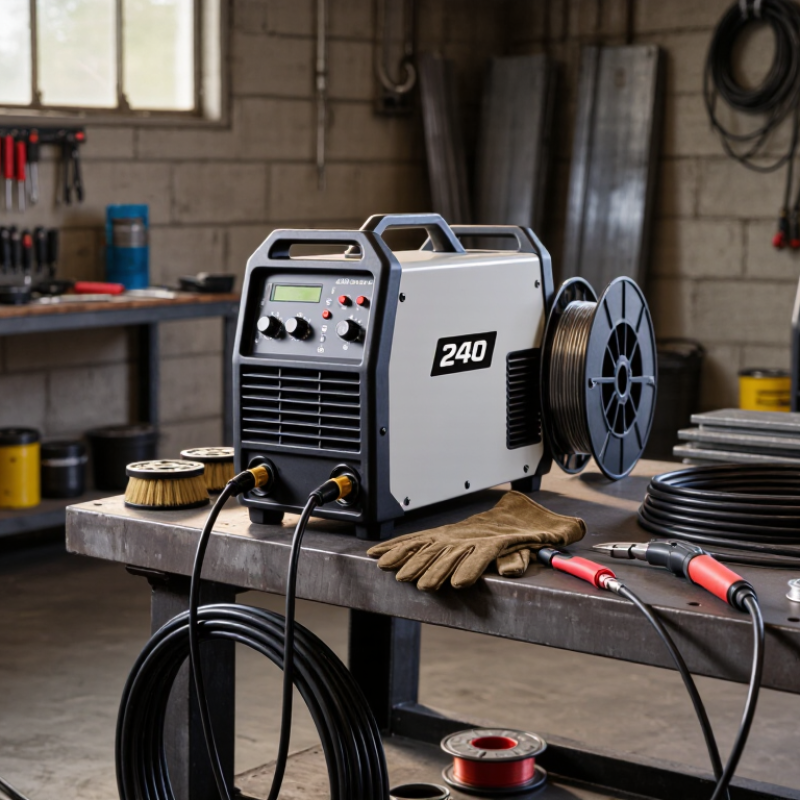
Start with material thickness, expected duty cycle, available power, and portability. A compact 120-volt model may suit farm repairs and thin steel. It may struggle with long structural welds. A 240-volt machine usually provides more headroom, but it costs more and demands better electrical planning.

Look for clear adjustment controls, thermal protection, spool capacity, and reliable after-sales support. Gas-shielded flux-core wire can improve appearance and reduce spatter. Self-shielded wire offers greater mobility, especially outdoors. Neither option is perfect. I would not choose a welder before testing its real duty cycle, because brochure numbers can feel optimistic.

How to Choose a Flux Core Welder?

Define Your Welding Needs and Project Requirements

How to Choose a Flux Core Welder?

Define your welding needs before comparing machines. Start with the material, thickness, joint type, and welding position. Thin sheet metal needs controlled low amperage and stable wire feeding. Structural repairs require deeper penetration and longer duty cycles. Outdoor work may favor self-shielded flux-cored wire because wind can disturb shielding gas. Indoor fabrication may benefit from gas-shielded wire and cleaner welds.

Measure your real workload. The U.S. Bureau of Labor Statistics projects about 42,600 annual openings for welders, cutters, solderers, and brazers through 2033. This demand reflects varied work, not one universal machine. Check the welder’s rated output at a stated duty cycle, such as 60% at 200 amps. A higher peak amperage sounds impressive, but it may matter little for occasional 3/16-inch steel. Wire diameter also affects control, penetration, and operating cost. Small details matter.

Power access can change the decision. Confirm whether your workspace provides 120-volt or 240-volt service. Review extension-cord limits, breaker capacity, and generator compatibility. The American Welding Society’s 2023 workforce study highlighted continuing shortages in skilled welding labor, making dependable equipment especially valuable.

Still, reliability is not only a product feature. Clean contact tips, correct polarity, dry wire storage, and proper grounding affect results. I would not choose from amperage alone. That shortcut is tempting. Test the machine on scrap steel, inspect bead shape, and record settings before starting the actual project.

Compare Flux Core Welder Types and Operating Processes

Choosing a flux core welder starts with matching the machine to the welding process and working environment. Self-shielded flux-cored arc welding uses a wire containing shielding ingredients. It does not require a gas cylinder, so it works well for outdoor repairs, farm equipment, and windy job sites. Wind still matters. Excessive airflow can disturb the protective gas around the arc and create porous welds.

Gas-shielded flux-cored welding uses an external cylinder, usually with a suitable shielding gas mixture. This process can produce cleaner welds, less spatter, and better control on thicker steel. However, hoses, regulators, and gas flow settings add more equipment to inspect. Dual-shield operation also needs reliable grounding and consistent torch movement. I check polarity carefully because the wrong setting can cause unstable arcs or weak penetration.

Wire diameter affects amperage, penetration, and control. Larger wire supports heavier plate, while smaller wire feels easier on thin material. Set voltage and wire speed according to the wire manufacturer’s guidance, then test on scrap steel. A short test bead reveals undercut, excessive spatter, or poor fusion. Do not trust the dial alone. Actual results change with joint position, surface rust, travel angle, and operator distance. I sometimes adjust too quickly, then have to slow down and reassess the bead. PPE, ventilation, and fire control remain essential during every operating process.

How to Choose a Flux Core Welder? - Compare Flux Core Welder Types and Operating Processes
Welder Type or Process Operating Principle Shielding Method Typical Materials and Thickness Main Advantages Limitations Best-Suited Applications
Self-Shielded FCAW A continuously fed tubular wire produces an arc while flux inside the wire generates shielding gases and slag. No external shielding gas is normally required. Commonly used on carbon steel and low-alloy steel, from light fabrication to heavy structural sections, depending on wire diameter and machine output. Portable and suitable for outdoor work. Wind has less effect than it does on gas-shielded processes, and it offers good penetration for many steel applications. Produces slag that must be removed. It can create more smoke and spatter than gas-shielded operation, and the finished bead may be less visible during welding. Field repair, construction, structural steel, farm equipment, and work in locations where transporting a gas cylinder is impractical.
Gas-Shielded FCAW A continuously fed flux-cored wire creates the arc, while an external gas protects the molten weld pool. Usually supplied with carbon dioxide or an argon-based gas mixture selected for the wire and metal being welded. Primarily carbon steel and low-alloy steel; commonly selected for medium-to-heavy plate and production fabrication. High deposition rate, strong penetration, and good productivity. The arc and weld pool are generally easier to observe than with self-shielded wire. Sensitive to wind and drafts. Requires a gas cylinder, regulator, hoses, and correct gas flow. Slag removal is still necessary. Fabrication shops, pressure-related fabrication where qualified procedures permit it, heavy equipment, and controlled indoor production.
Dual-Shield FCAW The flux-cored wire and external shielding gas work together to protect the weld pool and stabilize the arc. Flux-generated shielding combines with an external gas, often carbon dioxide or an argon-based mixture. Frequently used for carbon and low-alloy steels, particularly on thicker plate and structural components. Can provide high deposition rates, deep penetration, and high-quality welds when the procedure is correctly controlled. Less portable than self-shielded FCAW. It needs gas equipment, careful parameter control, and thorough slag removal between passes. Heavy fabrication, structural assemblies, shipbuilding, industrial machinery, and multi-pass welds on thick steel.
Inverter Flux Core Welder Uses high-frequency electronic switching to convert and regulate welding power instead of relying mainly on a large traditional transformer. Can operate with self-shielded or gas-shielded flux-cored wire, depending on the machine configuration. Suitable for steel fabrication and repair within the machine's rated output and wire-size range. Lightweight, compact, and usually energy-efficient. Electronic controls can provide stable arc characteristics and convenient voltage or wire-speed adjustment. May require more protection from dust, moisture, and impact than a basic transformer unit. Actual performance depends on input power and duty cycle. Portable maintenance, workshops, mobile repair, and users who need a compact machine with adjustable settings.
Transformer Flux Core Welder Uses a transformer to reduce and regulate input voltage while supplying welding current to the wire-feeding system. Supports self-shielded or gas-shielded flux-cored operation when the machine is designed for that process. Carbon steel and general fabrication within the unit's rated amperage and duty cycle. Often mechanically simple, durable, and straightforward to service. It can provide stable output for repetitive shop work. Typically heavier and less portable than an inverter. It may use more electrical power and offer fewer electronic adjustment features. Fixed workshop stations, repair bays, and applications where portability is less important than simple, robust operation.
Single-Voltage Welder Designed to operate from one specified input voltage and frequency. May support self-shielded wire, gas-shielded wire, or both, depending on the machine controls and accessories. Best for work performed in a location with a stable, compatible electrical supply. Simple installation and operation, with fewer input-power decisions for the user. Less flexible for job sites with different electrical systems. An improper power source can cause poor performance or equipment damage. Dedicated home workshops, production areas, and repair locations with a known electrical supply.
Dual-Voltage Welder Can be connected to two common input-voltage ranges, usually through the manufacturer's specified power connection or adapter. Often supports both self-shielded and gas-shielded flux-cored operation when the required controls are included. General steel repair and fabrication where work may occur in more than one location. More flexible for mobile users. It can adapt to different power sources while maintaining the same basic welding process. Output capacity may differ between input voltages. The operator must verify circuit protection, plug configuration, and the machine's rated output. Contractors, maintenance technicians, mobile repair work, and mixed workshop or job-site use.
Manual Wire-Feed FCAW The machine continuously feeds wire, while the operator controls travel speed, torch angle, stick-out, and weld placement. Self-shielded or gas-shielded, according to the selected wire and setup. Most common on carbon steel and low-alloy steel in repair, fabrication, and construction work. Fast to set up and highly adaptable to changing joint positions and component shapes. Weld quality depends strongly on operator technique. Incorrect travel speed, excessive stick-out, or poor angle can cause defects. Custom fabrication, repair work, short production runs, and jobs involving many different joint positions.
Mechanized or Automated FCAW A powered carriage or automated system controls torch travel or part movement while the wire feeder maintains a continuous arc. Usually uses external shielding gas, although some mechanized systems can use self-shielded wire. Best for repeatable welds on long seams, heavy plate, or components with consistent joint geometry. Consistent travel speed, repeatability, and high productivity. It can reduce operator fatigue during long welds. Higher setup cost and less flexibility for irregular parts. Joint fit-up, alignment, and parameter control must be consistent. Production lines, long structural seams, large fabricated components, and repetitive welding operations.
Selection note: Choose the process according to material type, metal thickness, welding position, indoor or outdoor conditions, available electrical supply, required portability, duty cycle, and the manufacturer's approved wire and shielding-gas specifications. Always follow the applicable welding procedure, equipment manual, and personal protective equipment requirements.

Evaluate Power, Duty Cycle, and Material Compatibility

Choosing a flux core welder starts with the work, not the advertised maximum amperage. I have found that thin sheet steel needs controlled low output, while brackets and frames demand more heat. Check the welder’s usable amperage range, voltage control, and wire size before buying. A 120-amp unit may suit repairs, but it can struggle on thick plate. More power is not always better. Use a dedicated circuit when required, and confirm the outlet can handle the welder safely.

Duty cycle describes how long the welder can run within a ten-minute period at a stated output. For example, a 40% rating at 150 amps means four minutes of welding, followed by cooling time. Real projects involve repositioning, cleaning, and inspection, so the rating is useful but not perfect. I once underestimated this pause time and planned a job too tightly. For material compatibility, verify that the machine supports flux-cored wire suited to your metal thickness and type. Carbon steel is common, but galvanized or coated surfaces require careful preparation and proper ventilation. Avoid guessing.

Tips: Match wire diameter to the thickness chart, then test on scrap metal. Listen for a steady arc and watch the bead profile. If the bead sits high, increase heat slowly or reduce travel speed. If it burns through, lower power or move faster. Record settings that work. A short test often reveals poor fit before wasted material.

Check Wire, Polarity, and Safety Equipment Requirements

Choosing a flux core welder starts with the wire, not the machine’s appearance. Check the wire diameter, material, and recommended amperage range. A thin wire may suit light sheet metal, while thicker wire needs higher output and a steadier duty cycle.

Polarity is easy to overlook. Some self-shielded flux core wires require direct current electrode negative, while gas-shielded wires often use electrode positive. Follow the wire manufacturer’s label and the welder’s manual. Do not guess. An incorrect setting can cause excessive spatter, weak penetration, or an unstable arc. I once treated polarity as a minor detail, and the rough weld made the mistake obvious.

Safety equipment must match the work. Wear a certified welding helmet with the correct shade, flame-resistant clothing, leather gloves, and closed footwear. Keep exposed skin covered. Use local exhaust ventilation, especially when coatings or painted surfaces are present. Remove flammable materials from the work area, and inspect the ground clamp before striking an arc. It should grip clean metal firmly. A nearby fire extinguisher and a short post-weld fire watch are sensible precautions. Check the cable insulation too. Small damage can become a serious hazard. Follow current workplace rules and the equipment manual, even when an experienced operator suggests a faster shortcut.

Choose Features, Budget, and Maintenance Support That Fit

How to Choose a Flux Core Welder?

Choose features that match your real work, not an impressive specification sheet. For thin steel, adjustable voltage and stable wire feeding matter more than extreme amperage. A machine with a 20–30% duty cycle may suit occasional repairs. Production work needs a higher rating. Check the duty cycle at its stated current, because ratings can be misunderstood. Confirm wire compatibility, polarity settings, torch length, and available shielding options before buying.

Budget beyond the purchase price. A practical estimate should include wire, contact tips, liners, gloves, electricity, and replacement parts. The U.S. Bureau of Labor Statistics reported about 45,000 annual openings for welders, cutters, solderers, and brazers from 2023 to 2033. That demand makes reliable equipment valuable, especially for repeated training or workshop use. Still, a costly welder is not automatically the best choice. I would rather buy a simpler unit with dependable feeding than pay for controls I rarely use.

Maintenance support can decide whether a repair takes twenty minutes or several days. Look for clear manuals, accessible service parts, responsive technical assistance, and a realistic warranty process. The American Welding Society has projected a need for roughly 330,000 new welding professionals by 2028, increasing pressure on training equipment and uptime. Ask how quickly common parts can be supplied. This is where many buyers misjudge the cost. A small price advantage may disappear after one failed liner, clogged tip, or confusing fault code.

How to Choose a Flux Core Welder: Features, Budget, and Maintenance Support

Recommended decision weighting by welding application

The scores represent a practical selection framework out of 100. Occasional DIY work usually benefits most from a lower purchase budget, while regular repair and fabrication place greater emphasis on duty cycle, wire-feed control, spare parts, warranty coverage, and service availability.