PCB Board Design Tips for Efficient Manufacturing What to Know?
In the fast-evolving world of electronics, efficient PCB board design is crucial. According to renowned industry expert Dr. Emily Zhang, "Optimizing PCB design is key to reducing production costs and enhancing performance." Her insights emphasize the importance of careful planning in the design process.
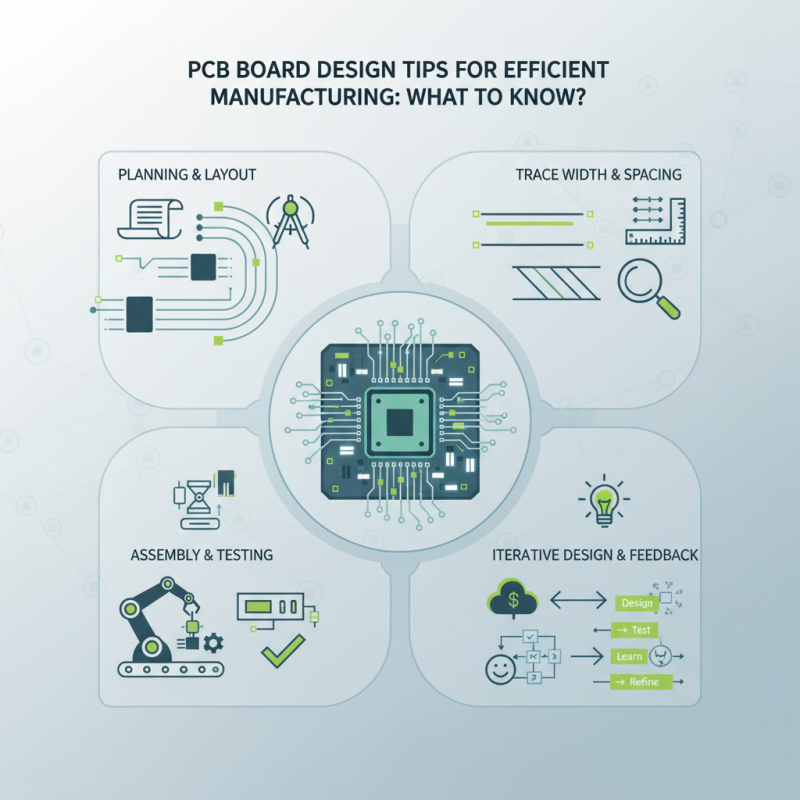
Many engineers overlook the impact of design details on manufacturability. Choices in layout, trace width, and component placement can affect not only functionality but also production efficiency. For instance, maintaining proper spacing can prevent common soldering issues. It's vital to consider how these elements influence both assembly and testing.
Reflecting on past experiences, designers often notice that minor oversights can lead to significant delays. It’s common to underestimate how board complexity affects manufacturing yields. Emphasizing simple, clear designs can lead to improvements. Designers must continually adapt and learn from each project, embracing feedback to enhance future PCB board designs. Recognizing and addressing these challenges can elevate the overall quality and reliability of electronic products.
Understanding the Basics of PCB Board Design for Manufacturing
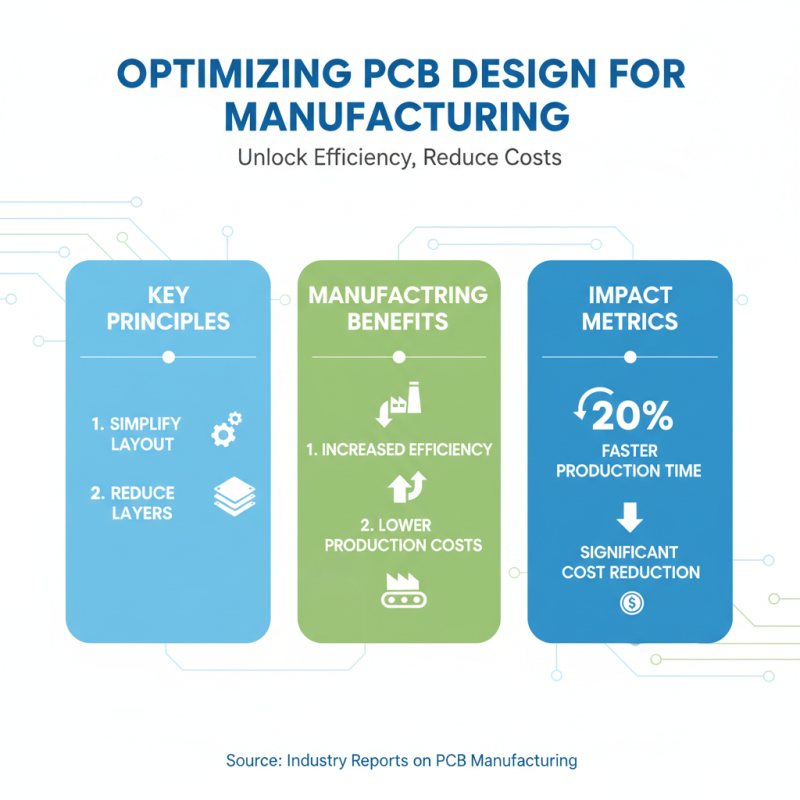
When designing PCBs for manufacturing, understanding the basic principles is crucial. A well-designed PCB optimizes manufacturing efficiency. For instance, layout strategies that reduce the number of layers can lower costs significantly. Reports indicate that simpler designs can cut production time by up to 20%.
Selecting appropriate materials also plays a vital role. Material reliability affects both performance and production speed. Data shows that using high-quality substrates can enhance signal integrity, especially in high-frequency applications. However, these materials can be more expensive. Balancing cost and quality often requires careful deliberation.
Design errors can lead to costly reworks or delays. About 30% of PCB manufacturing defects arise from design flaws. Regular audits of design practices can help catch issues early. Industry experts advocate for pre-production prototype testing to identify potential pitfalls. Even small mistakes can have significant repercussions. Investing time in refining design processes pays off in the long run.
Key Considerations for Material Selection in PCB Fabrication
Selecting the right materials for PCB fabrication is crucial for performance and cost-effectiveness. According to a report from IPC, approximately 80% of defects in PCBs can be traced back to material choices. This highlights the importance of understanding material properties, such as thermal conductivity and dielectric strength, before finalizing a design.
In high-frequency applications, low-loss materials are essential. Rogers Corporation's data indicates that using advanced laminates can reduce signal loss significantly, improving board reliability. However, these materials can be more expensive. Designers must balance performance needs against budget constraints, often leading to difficult decisions. It's important to acknowledge that over-specifying materials can inflate costs unnecessarily, resulting in poor overall project budget management.
For surface finishes, options like ENIG (Electroless Nickel Immersion Gold) or HASL (Hot Air Solder Leveling) are common. Each finish has distinct advantages but also limitations. ENIG provides excellent solderability, while HASL is cost-effective. Manufacturers may face challenges with the adhesion of solder to certain finishes, creating potential reliability issues. Therefore, a thorough understanding of these finishes can lead to more informed choices that meet both technical and economic criteria.
Best Practices for Layout and Routing in PCB Design
Designing a PCB layout is an art and a science. Effective routing and placement can lead to efficient manufacturing. Here are some essential tips to enhance your PCB design process.
Start with a clear schematic. A well-structured schematic acts as the foundation for your PCB layout. Mistakes at this stage can lead to costly revisions later. Ensure that components are placed logically. Group related components close to each other to minimize trace lengths. This not only improves performance but also reduces fabrication errors.
Additionally, be mindful of trace widths and spacing. Follow manufacturer guidelines for the best results. Inadequate trace widths can lead to overheating. On the other hand, traces that are too close may cause shorts. Use design tools to simulate electrical performance. This can help identify potential issues early on.
Lastly, don't overlook the importance of test points. They can facilitate easy debugging in the testing phase. However, their placement should not interfere with component layout. Reflect on your previous designs. Identify what went well and where improvements can be made. Constant learning is key in PCB design.
PCB Board Design Tips for Efficient Manufacturing
| Design Aspect |
Best Practice |
Notes |
| Layer Stack-up |
Define a clear layer stack-up |
Consider signal, power, and ground layers |
| Component Placement |
Place components logically and close to their connections |
Minimize trace lengths |
| Trace Width |
Calculate appropriate trace widths for current carrying |
Use IPC-2221 standards |
| Via Usage |
Minimize via usage, especially blind/buried vias |
Consider costs and manufacturing capabilities |
| Ground Planes |
Use solid ground planes for better grounding |
Reduces noise and improves integrity |
| Design Rule Check (DRC) |
Run DRC regularly during design |
Catch errors early |
Techniques for Minimizing Production Costs in PCB Manufacturing
When designing PCB boards, minimizing production costs is key. Start with the layout. A compact design reduces material costs. Utilize surface mount components whenever possible. They save space and reduce assembly time. Keep traces short. This not only saves materials but also improves signal integrity.
Consider the complexity of your design. Overly intricate designs can drive up costs. Simplifying your PCB can lead to significant savings. Standardizing component sizes can also help. It allows for bulk purchasing, which further reduces expenses. Don’t overlook the importance of simulation tools. They help catch potential errors early. This can save time and money during production.
Communication with manufacturers is essential. Ensure your design meets their capabilities. Misunderstandings can lead to costly mistakes. Regular feedback can improve future designs. Reflect on past projects. Identify what went well and what didn’t. Learn from these experiences. By applying this knowledge, you can create more efficient, cost-effective PCB designs.
PCB Manufacturing Cost Analysis
This bar chart illustrates the various costs associated with PCB manufacturing. The data shows the breakdown of material, labor, machine, overhead, and testing costs, highlighting areas where cost minimization techniques can be applied for more efficient production.
Quality Control Measures in PCB Production and Assembly Processes
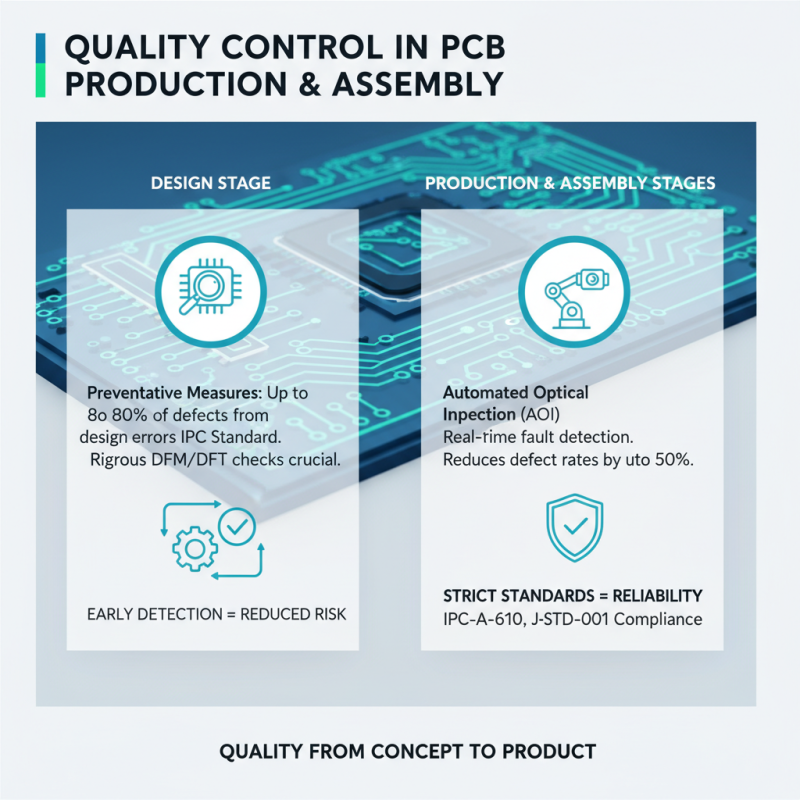
Quality control in PCB production is vital. According to IPC standards, nearly 80% of PCB defects can be traced to design errors. Implementing strict quality measures at both production and assembly stages can mitigate these risks. For instance, utilizing automated optical inspection (AOI) systems can detect faults in real-time. A study showed that AOI reduced defect rates by up to 50%.
Furthermore, effective quality control requires continuous testing. In-process testing, such as functional testing, ensures that each PCB meets specifications. A report from a leading electronics manufacturing association indicated that companies implementing in-process testing see a drop in failure rates by 30%. However, not all manufacturers fully commit to these practices. This oversight often leads to higher rework costs and delivery delays.
In addition, maintaining a well-documented quality management system is crucial. Firms that adhere to ISO standards often report improved operational efficiency. However, accumulating and analyzing data can be challenging. Some companies struggle with data management systems. This can hinder their ability to track defects and implement changes. Identifying these gaps is essential for maintaining high-quality manufacturing standards.