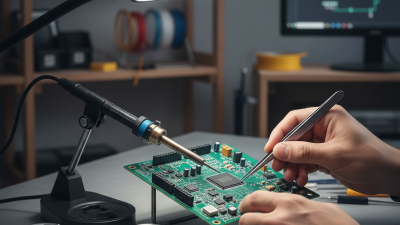
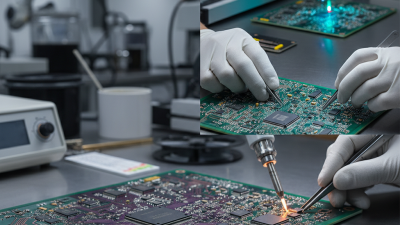
Choosing the right China PCB assembly prototype service can determine whether a promising design reaches testing smoothly or becomes an expensive delay. A reliable partner should offer more than low pricing. It should demonstrate engineering experience, stable sourcing, clear communication, and documented quality controls. Ask how the team handles component substitutions, design-for-manufacturing reviews, solder paste selection, and assembly changes during a prototype run.
Look closely at the production details. Can the factory provide IPC-A-610 workmanship standards, inspection records, and component traceability? Does it use automated optical inspection, X-ray inspection, or functional testing when the board requires them? A practical supplier should review Gerber files, the bill of materials, and pick-and-place data before quoting. This review may reveal a missing polarity mark or an unavailable microcontroller before fabrication begins. Small discoveries matter.
Speed matters, but not at any cost. A three-day quote means little if communication stops afterward. Request a sample timeline covering engineering review, purchasing, assembly, inspection, and delivery. Confirm whether the supplier supports small quantities and controlled revisions. Some factories promise complete flexibility, yet charge heavily for minor changes. That limitation should be visible early.
No supplier is perfect. I have seen fast prototypes expose weak documentation and rushed approval steps. That experience encourages a more careful evaluation. Compare evidence, not polished claims. The best pcb assembly prototype partner is one that explains risks clearly, protects design data, and improves the process after each build. Reliability is proven on the workbench.
A China PCB assembly prototype service is more than a factory that places components. It combines engineering review, controlled purchasing, assembly, inspection, and feedback. Experienced teams study Gerber files, bills of materials, pick-and-place data, and assembly drawings before production. They check pad sizes, polarity marks, thermal reliefs, and component availability. Small errors hide there. A useful service asks questions early, not after boards fail.
Practical expertise appears in design-for-manufacturing advice. Engineers may suggest wider spacing, clearer reference marks, or a different stencil opening. They should explain each change with evidence, not vague promises. Prototype quantities often change quickly, so purchasing needs approved alternatives and documented lot information. Traceability matters. It connects each component to a supplier record and inspection result. Reliable communication also defines the service. Customers should receive realistic schedules, process updates, and clear notices when risks appear.
Quality control should include solder-paste inspection, automated optical inspection, and functional testing when suitable. Experienced operators also inspect unusual parts manually. A first build may expose a library mistake or an awkward connector position. That is not a success. It is useful evidence. The service should record the defect, correct the process, and confirm the next revision. I have found that honest feedback is more valuable than perfect-looking reports. No prototype process is flawless. Reliability grows when the team measures weaknesses and responds consistently.
Choosing a China PCB assembly prototype service requires more than comparing prices. Examine its technical capabilities and manufacturing controls. Ask whether the factory handles your layer count, fine-pitch components, impedance control, and mixed SMT and through-hole assembly. A capable engineering team should review Gerber files, schematics, BOMs, and pick-and-place data before production. Their DFM feedback should identify weak solder masks, narrow spacing, or unavailable components.
Manufacturing quality becomes visible in small details. Check whether the line uses solder paste inspection, automated optical inspection, and X-ray inspection for hidden joints. Request sample inspection records, material traceability, and rework procedures. Compliance with recognized standards, such as IPC-A-610, adds useful evidence, but certificates alone prove little. Ask how defects are recorded and corrected. A perfect first build is uncommon. Honest reporting matters more than polished promises. Some suppliers may overlook connector tolerances or assembly access, so review their feedback carefully.
Tips: Send a complete prototype package, including assembly drawings and testing requirements. Ask for a process flow and a sample quality report. Confirm component sourcing controls, production lead time, and communication during engineering changes. If possible, inspect a similar board or request a pilot run. Small omissions can become expensive; I would review the BOM twice.
Lead time should be measured from approved files, not the first email. Ask for separate dates for component sourcing, bare-board fabrication, assembly, inspection, and shipping. McKinsey’s 2024 supply-chain research reported that 73% of surveyed companies had changed their supply-chain networks. This shows why flexible scheduling matters. A supplier offering seven days may still need three weeks for scarce components.
Pricing requires more than comparing the assembly fee. Request a line-by-line quotation covering tooling, programming, testing, freight, and parts substitutions. IPC’s 2024 Electronics Industry Sentiment Survey identified material costs and labor availability as continuing industry pressures. Therefore, unusually cheap pricing deserves questions. A lower quote can hide higher component premiums. It happens.
Tips: Provide a complete BOM, Gerber files, and assembly drawings. Ask whether the minimum order quantity applies per design or per batch. For prototypes, a low MOQ, such as five or ten boards, reduces inventory risk. Confirm whether the supplier can pause production after an engineering change. I would also request sample inspection photos and a written rework policy. Small details protect the schedule.
Choosing a China PCB assembly prototype service requires more than comparing prices. Verify certification scope, expiration dates, and the exact factory address. ISO 9001 matters because it formalizes document control, corrective actions, and process monitoring. The ISO Survey 2023 recorded more than 1.2 million ISO 9001 certificates worldwide, but certification alone does not prove excellent assembly work.
Ask whether the facility follows IPC-A-610 for assembly acceptance and J-STD-001 for soldering requirements. For automotive prototypes, IATF 16949 may indicate stronger process discipline. Medical projects may require ISO 13485. Request recent audit reports, calibration records, and employee training logs. Ask for evidence. Not promises.
Quality controls should include incoming inspection, solder-paste storage logs, SPI, AOI, and X-ray inspection for hidden joints. Confirm traceability from component reel to finished board. IPC’s 2023 Electronics Industry Survey identified material availability and supply-chain disruption as continuing industry concerns, so verify approved alternates and counterfeit-component controls. A useful supplier should explain its sampling plan, defect limits, and rework rules clearly. If every answer sounds perfect, investigate further. Real factories usually disclose a limitation, such as limited X-ray capacity or manual inspection during small prototype runs. That honesty can be more valuable than polished sales language.
| Verification Area | Relevant Standard or Control | What to Verify | Why It Matters for Prototypes | Recommended Evidence | Priority |
|---|---|---|---|---|---|
| Quality management system | ISO 9001 | Confirm that the certificate is current, covers PCB assembly activities, identifies the actual production site, and is issued by an accredited certification body. | Shows that documented procedures exist for planning, inspection, nonconformities, corrective action, and continual improvement. | Current certificate, scope statement, certificate number, expiry date, and certification-body accreditation details. | Essential |
| Medical-device quality system | ISO 13485, when applicable | Verify whether the certificate scope covers the intended assembly process and whether the supplier understands medical-device traceability and process controls. | Medical products generally require stronger documentation, risk control, records retention, and change-management discipline. | Current certificate, scope, audit status, quality agreement, lot-traceability procedure, and record-retention policy. | Conditional |
| Automotive quality system | IATF 16949, when applicable | Check whether the audited scope includes the relevant manufacturing location and processes, rather than relying on a general quality claim. | Supports automotive-style process management, defect prevention, supplier control, and continual-improvement practices. | Current certificate, scope, process-audit records, control plans, and evidence of corrective-action tracking. | Conditional |
| Aerospace quality system | AS9100, when applicable | Verify the exact certified site and scope, plus controls for configuration management, product safety, and counterfeit-part prevention. | Useful when prototype assemblies may enter aerospace or other safety-critical applications. | Current certificate, scope, configuration-control procedure, counterfeit-part procedure, and audit evidence. | Conditional |
| Assembly workmanship | IPC J-STD-001 and IPC-A-610, to an agreed class | Confirm the required acceptance class, revision, training records, workmanship criteria, and handling of borderline defects. | Creates a common basis for judging solder joints, component mounting, cleanliness, and assembly defects. | Purchase-order quality clause, inspection checklist, trained-inspector records, and sample inspection reports. | Essential |
| ESD protection | ANSI/ESD S20.20 or an equivalent documented ESD program | Inspect wrist-strap and footwear testing, grounded workstations, humidity monitoring, ESD packaging, and audit frequency. | Reduces the risk of immediate or latent electrostatic damage to sensitive components. | ESD certification or program documents, daily test logs, floor-plan controls, and recent internal-audit records. | Essential |
| Material compliance | RoHS and REACH requirements, when applicable | Define the applicable legal market and request supplier declarations, material declarations, or laboratory test reports for the actual parts used. | Prevents compliance problems caused by restricted substances, changed components, or undocumented substitutions. | Component declarations, bill-of-materials compliance records, homogeneous-material data, and change notifications. | Essential |
| Incoming material inspection | Documented incoming-quality-control procedure | Verify checks for part number, revision, quantity, packaging, date codes, moisture sensitivity, visible damage, and supplier documentation. | Catches wrong, damaged, counterfeit, or moisture-affected parts before they enter the prototype build. | Incoming inspection records, approved-vendor controls, barcode records, and nonconformance reports. | Essential |
| Printing and placement controls | SPI and machine setup verification | Ask whether solder-paste volume, offset, bridging risk, feeder setup, polarity, package orientation, and first-article settings are checked. | Reduces common prototype defects such as insufficient solder, misplacement, reversed components, and tombstoning. | SPI records, first-article approval, machine setup checklist, and placement-program revision control. | Essential |
| Post-assembly inspection | AOI, visual inspection, and X-ray where needed | Confirm inspection coverage for fine-pitch, bottom-terminated, hidden-solder, through-hole, and polarity-sensitive components. | Provides objective evidence that assembly workmanship meets the agreed acceptance criteria. | AOI program coverage, inspection images, X-ray samples for hidden joints, defect logs, and rework records. | Essential |
| Electrical testing | ICT, flying-probe, boundary-scan, or functional testing | Determine which test method fits the prototype quantity, test access, circuit complexity, and maturity of the design. | Detects open circuits, shorts, incorrect values, assembly faults, and selected functional failures that visual inspection cannot find. | Test specification, fixture or program ownership, pass/fail records, calibration status, and failure-analysis reports. | Essential |
| Reflow and soldering process | Thermal-profile control and process-window verification | Verify profile measurement for the actual board and paste combination, along with oven maintenance and profile approval records. | Helps control solder-joint reliability, component thermal exposure, voiding risk, and inconsistent wetting. | Thermal-profile graphs, solder-paste technical data, oven-maintenance logs, and approved process parameters. | Essential |
| Traceability | Lot, material, operator, machine, and inspection traceability | Check whether the supplier can link each assembled board to BOM revision, component lots, process records, test results, and rework history. | Speeds root-cause analysis and limits the impact of a material or process problem. | Sample traveler, barcode or serial-number record, batch history, and certificate-of-conformance format. | Essential |
| Calibration and measurement | Documented calibration system; external calibration may use ISO/IEC 17025-accredited laboratories | Verify calibration status, equipment identification, due dates, measurement standards, and actions taken when equipment is found out of tolerance. | Ensures that inspection and test results are based on reliable measurement equipment. | Calibration certificates, equipment register, overdue-control procedure, and out-of-tolerance investigation records. | Essential |
| Nonconformance and corrective action | NCR, CAPA, root-cause analysis, and rework control | Ask how defects are contained, analyzed, dispositioned, reworked, re-inspected, and prevented from recurring. | Prototype builds often expose design and process issues; disciplined responses prevent repeated failures in later revisions. | Redacted NCR/CAPA examples, 5-Why or equivalent analysis, rework instructions, and closure evidence. | Essential |
| Engineering change control | Revision, BOM, Gerber, approved-substitution, and deviation control | Verify that changes require approval and that the supplier records who approved substitutions, deviations, and updated manufacturing data. | Prevents an unapproved component or outdated file from changing prototype performance. | Revision-controlled document system, engineering-change form, deviation approval, and build-history records. | Essential |
| Final documentation | Build report and certificate of conformance | Define which records will be delivered, such as inspection results, test results, material declarations, deviations, and rework history. | Makes the prototype reproducible and supports design reviews, regulatory files, and future production transfer. | Sample redacted build dossier, inspection summary, test report, material-compliance package, and deviation list. | Essential |

Practical verification rule: Confirm that every certificate and quality record applies to the specific manufacturing site, process, product scope, and current validity period—not merely to the supplier’s general organization.
Choosing the right China PCB assembly prototype service starts with your project’s actual risks. A low price is not enough. Ask whether the factory handles your board size, layer count, component package, and expected quantity. Confirm its experience with fine-pitch parts, mixed technology, and controlled impedance when required. Small details matter.
Request a technical review before placing an order. A capable engineering team should check your Gerber files, bill of materials, assembly drawings, and component availability. It should also identify unclear footprints or missing tolerances. Ask for a sample inspection report. Check solder quality, placement accuracy, rework control, and electrical testing methods. Clear answers build trust.
Communication can decide whether a prototype succeeds. Choose a service that provides one contact person, realistic lead times, and written change records. Ask how it protects design files and traces material batches. Certifications and inspection records are useful, but they do not replace direct evidence. Request photos from production when practical. Keep questions specific.
Do not judge the service from one impressive quotation. Compare tooling fees, component sourcing, testing, shipping, and possible rework costs. A very fast promise may deserve closer review. Prototype schedules often change. Your supplier should explain what happens when a component becomes unavailable. That process may seem ordinary, yet it can prevent expensive delays. I would also test the relationship with a small pilot order. It may reveal communication gaps that a polished sales call cannot show.
For prototype projects, the highest priorities are reliable assembly quality, fast turnaround, and useful DFM feedback. Use these weighted criteria to compare potential services, then verify their capabilities through sample documentation, inspection records, and a small pilot order.